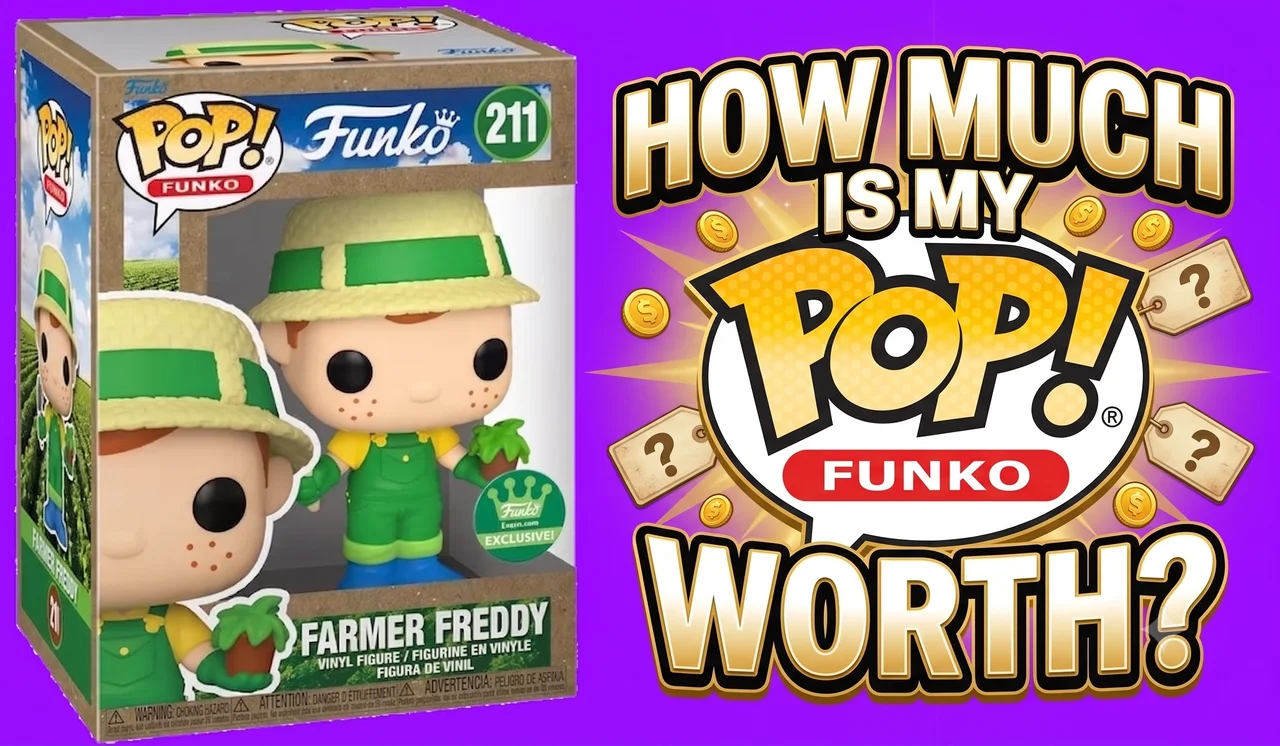
It's the question that brings almost everyone to a price guide in the first place: that big-headed figure on the shelf — is it worth anything? The honest answer is a spectrum. Most Funko Pops are worth roughly what you paid, somewhere in the $10–$20 range. A smaller slice are worth a comfortable bit more. And a rare few change hands for the price of a used car. This guide explains what actually decides where your Pop lands on that spectrum, how to check its real value in a couple of minutes, and which Pops are the ones people mean when they say 'worth a fortune'.
The One-Sentence Answer: Sold Prices, Not Asking Prices
Before anything else, learn the single most valuable habit in the hobby. A Funko Pop is worth what it actually sells for — not what a hopeful seller is asking. Anyone can list a common figure for $200; that number tells you nothing. What matters is the price real buyers have recently paid. That is the entire idea behind a price database like ours: we track genuine sold prices across the market so you can see the real value at a glance, instead of guessing from wishful listings. When you look up any Pop, look at the sold history, not the top asking price. Do that and you already value figures better than most casual sellers.
What Actually Decides a Funko Pop's Value
Three forces set the price of every Pop. Understand them and you can eyeball a figure's value before you even search. Our full rarity, grading and price guide goes deep on each; here's the working version.
1. Demand — Does Anyone Want It?
This is the big one, and the one new collectors underrate. Demand always wins. A figure of a beloved character from a franchise people still care about will outsell a 'rarer' figure from a forgotten licence every time. A low-numbered exclusive of a character nobody's chasing can sit unsold for months, while a plain retail common of a fan-favourite quietly climbs. Scarcity only matters when desire is already there. When you see a Pop selling high, the first question isn't 'how rare is it' — it's 'who wants it, and how badly'.
2. Scarcity — How Many Exist?
Once demand is established, scarcity is the multiplier. The main ways a Pop becomes scarce:
- Chase variants — rare variants randomly packed at roughly one in six, typically worth several times the common. Full story in our chase guide.
- Exclusives — convention, retailer and event releases, each marked by a box sticker. The sticker often is the value; our sticker guide decodes every one.
- Vaulted figures — once Funko discontinues a Pop, supply is fixed forever. What that does (and doesn't) do to price is covered in our vaulted guide.
- Numbered limited editions — 'LE 3000', 'LE 500', or hand-numbered Fundays pieces put the scarcity in writing. The smaller the number, the harder your heart beats.
3. Condition — What State Is It In?
For most collectors, condition means the box. A Pop is a window-box collectible, and the box is genuinely most of the resale value — a mint figure in a crushed box can lose half its worth or more. Sharp corners, no creases, a clean unscratched window and an intact sticker all matter. Our box condition grading guide breaks down exactly how condition translates to dollars. If you're keeping boxes, a soft plastic protector (about a dollar) is the best cheap investment you'll make.
How to Value Your Funko Pop in Four Steps
Here's the practical routine, start to finish:
- Identify it precisely. Find the item number on the box and note any sticker (Chase, SDCC, a retailer name, an LE number). Two figures of the same character can be worth wildly different amounts based on that sticker alone.
- Look it up on a price database. Search the character or number in our catalogue and open the exact version — matching the sticker and variant you actually have.
- Read the sold prices, not the listings. Focus on what recent buyers paid. A cluster of real sales is your true market value; ignore the lone $500 'or best offer' outlier.
- Adjust for your condition. Sold prices usually assume a clean box. Knock value off for creases, dings or a missing/damaged sticker — see the grading guide for how much.
Two minutes, and you have a number you can actually trust — whether you're buying, selling or just curious.
What Are the Most Valuable Funko Pops?
When people talk about Pops 'worth a fortune', they almost always mean the same handful of categories — and it's rarely the figure you'd guess from a normal shop shelf:
- Ultra-limited convention and Fundays pieces — hand-numbered runs in the low hundreds, or Freddy Funko party exclusives, are the true blue-chip grails. Our Fundays coverage shows why these top the charts.
- Artist proofs and prototypes — a tiny number of early or hand-finished pieces per release. Genuinely rare, and heavily faked — never buy one on trust alone.
- Early, long-vaulted grails — sought-after figures from years ago whose supply dried up while demand kept growing.
- Metallic, GITD and other chase variants of beloved characters — the sweet spot of high demand meeting real scarcity. Browse every chase variant in the database here.
Notice the pattern: the four-and-five-figure Pops all combine strong demand with genuine, verifiable scarcity. And a warning that saves real money — the higher the value, the more the fakes swarm. Before spending grail money, read our guide to spotting fakes. Anime grails, by the way, have been some of the fastest climbers of recent years — the story's in our anime investment piece.
What Makes a Funko Pop Worth Less
Just as useful to know what drags value down, so you don't overpay or over-hope:
- A damaged box. The single biggest value-killer for common and mid-tier figures.
- No sticker on an exclusive-looking figure. For resale, the stickered and unstickered versions are effectively different items at different prices.
- Reprints and unvaulting. When Funko brings a vaulted figure back, the original's scarcity premium can deflate overnight — one reason to never pay as if the vault is forever.
- It's simply a common. Most standard retail Pops stay near retail. That's not a failure — a shelf of figures you love is the point; value is a bonus, not the goal.
Are Funko Pops a Good Investment?
Honestly? Treat them as a hobby first and an investment a distant second. The Pops that appreciate meaningfully are the ones bought with knowledge — the right exclusive, kept mint, in a franchise with staying power — not random figures grabbed because a 'these will be worth thousands' video said so. Most commons will never beat their retail price. But collect what you love, learn to read demand and scarcity, keep your boxes sharp, and the occasional figure that does climb becomes a genuine bonus on top of a shelf that already makes you happy. Our rarity and price guide is the deeper read on valuing with intent.
Quick Answers
- Are Funko Pops worth anything? Most are worth around $10–$20; a minority are worth much more, and a rare few sell for thousands. Value depends on demand, scarcity and condition — check the real sold prices rather than guessing.
- How do I know if my Funko Pop is rare? Check the box for a sticker (Chase, convention, retailer, LE number) and look up how it's selling. Rarity without demand doesn't equal value — our glossary defines every marker.
- Do I need the box for a Pop to be worth money? For resale, yes — the box is most of the value, and its condition sets the grade. For your own shelf, out-of-box is a perfectly valid lifestyle.
- Where can I check what my Funko Pop is worth? Search it in our price database and read the sold history for the exact variant and sticker you own.
That's the whole picture: value is demand times scarcity, adjusted for condition, and proven by real sales. Put it to work — look up your shelf in the catalogue, brush up on the fundamentals in our beginner's guide, or explore more of the Getting Started hub. Happy valuing.