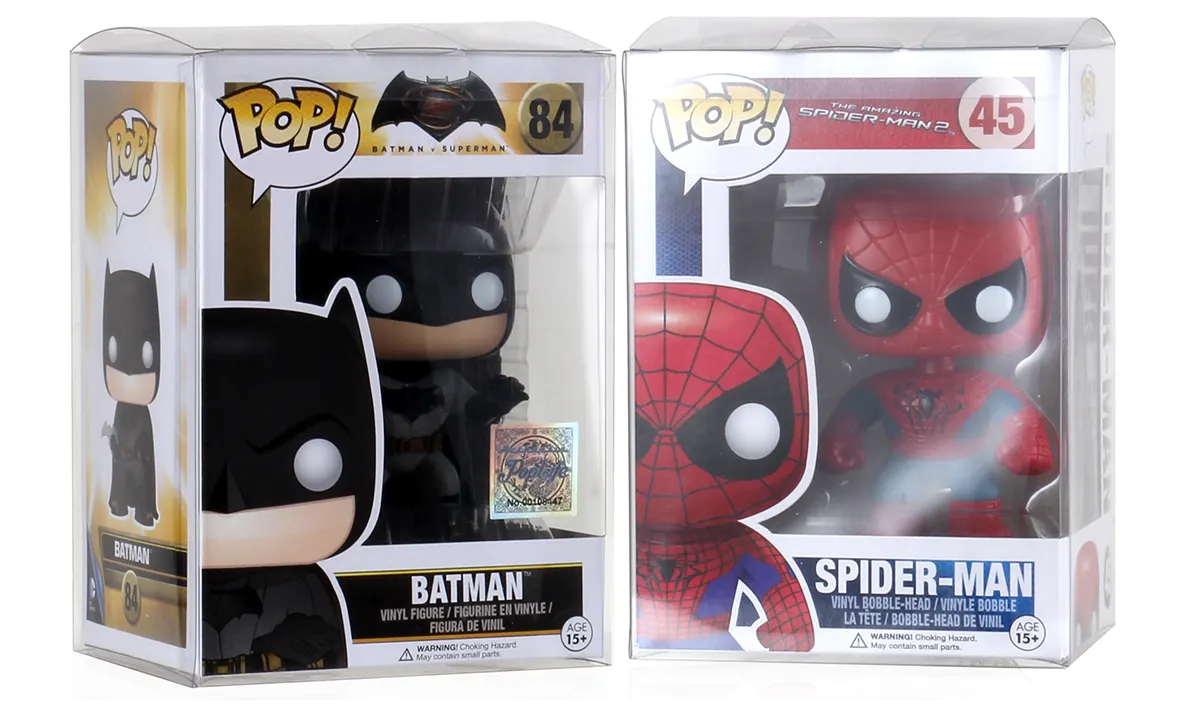
Funko collecting has exploded, and with that growth comes an ugly side effect: counterfeits are flooding the market. Collectors report fakes turning up "almost daily," which threatens both the value of your collection and the simple joy of building one. Whether you've got hundreds of figures or you're just starting the hunt, knowing how to spot an authentic Pop isn't just handy — it's essential.
This guide walks through the techniques veteran collectors use to authenticate figures — the telltale signs that separate the genuine article from a knock-off, from subtle box details to the markers stamped into the figure itself. No more second-guessing a purchase or sweating over a deal that looks too good to be true. Pair it with our rarity, grading and price guide and you'll buy with real confidence.
Part 1: Smart Buying — Your First Line of Defence
The best way to avoid a fake? Know where (and where not) to shop. Let's cover the safest places to build a collection and the warning signs that should make you pause before clicking "buy."
Trusted Sources for Authentic Pops
- Official retailers: Hot Topic, GameStop and Barnes & Noble are authorised Funko dealers. They may not carry rare vaulted items, but the figures are guaranteed genuine.
- Funko's online store: shop straight from the source at Funko.com for new releases and exclusives.
- Licensed comic shops: many local stores are authorised dealers — build a relationship with yours.
Red Flags: When to Walk Away
The community has flagged several patterns that often signal a counterfeit. First, the "too good to be true" price:
- Vaulted or rare Pops selling 50–90% below market value.
- Common Pops listed far below retail.
- Bulk deals on typically expensive figures.
Then there are suspicious seller patterns:
- Account created within the last 6 months.
- Limited or negative feedback.
- Large quantities of rare/vaulted Pops available.
- Ships from known counterfeit sources.
- Only uses stock photos, and won't provide extra pictures when asked.
And be especially wary of the "perfect" find:
- Multiple copies of vaulted figures.
- A "just found a box" of rare convention exclusives.
- A seller who has every hard-to-find Pop you want.
- Unlimited stock of limited editions.
Pro Tip: Always Check Multiple Sources
Before buying anything valuable:
- Compare prices across multiple sellers.
- Check completed eBay sales for true market value.
- Ask trusted collector groups about fair pricing.
- Review the seller's history and feedback.
Protecting your collection starts before you buy. When in doubt, pass — it's better to miss a bargain than to knowingly take home a fake.
Part 2: The Authentication Playbook — What to Check
Every authentic Pop has specific markers that set it apart. Here's exactly what to examine, starting with the box and working down to the figure.
Serial Numbers Tell the Story
- Every authentic Pop has a unique serial number on the box bottom.
- Numbers include the manufacturing year and item number.
- They must match the number on the figure's foot.
- Watch out for: printed labels (real ones are pressed/stamped), bold/wide text, or missing numbers.
Box Art Details Matter
The devil's in the details — literally. Check the window border first: it should be thin and uniform, with clean precise edges and no gaps or width variations. Counterfeits often have wider or inconsistent borders. Then the logo: the Funko logo should show a smooth white-to-yellow gradient with crisp, clear text — watch for solid colours, blurry text, or off-centre placement.
The Foot Test
- Check for a stamped (not printed) serial number.
- Look for the Funko LLC logo.
- Numbers should match the box.
- The surface should be smooth, not rough or uneven.
Quality Markers: Weight, Feel, Paint
- Authentic Pops have substantial weight — they should never feel hollow or extremely light, and the plastic feels smooth and consistent.
- Paint applications have clean lines, colour-match the box art, and show no obvious drips or messy edges.
- Details match the official product photos.
Special Features: Stickers & Glow
Exclusive stickers should have sharp, clear printing, correct size and placement, proper colour matching, and no peeling corners or bubbling. For glow-in-the-dark Pops, look for even glow distribution, proper colour intensity, a match to official photos, and no spotty or weak areas. Remember: no single marker proves authenticity — it's the combination that tells the full story.
Part 3: Beyond the Basics — Advanced Strategies
Digital Verification Tools
The Funko app can scan UPC codes and is handy for general reference and price checks — but beware, counterfeiters copy UPCs, so never rely on scanning alone. For reference images, eBay sold items are gold, and you can use the
Use POPs Today sold items to see real image variations across listings, alongside official Funko announcements, trusted collector databases and Facebook authentication groups.
Special Edition Authentication
Convention exclusives live and die by their stickers — verify quality and placement, the correct convention year, matching production dates, and convention-specific details. Common con-sticker fakes show incorrect colour gradients, missing holographic elements, wrong font weights, and misaligned graphics.
Store exclusives need retailer-specific sticker details, proper item numbering, features that match the announcement, and distribution-date verification. For chase variants, check the correct ratio of special features, proper chase-sticker placement, paint and detail variations, and the production number. Stickers are exactly the kind of thing the box condition grading guide covers from the value side.
Build Your Authentication Skills
- Stay updated: follow official Funko news, join collector communities, study new protection features and emerging fake trends.
- Network: connect with experienced collectors, share findings, document new counterfeit patterns, build relationships with trusted sellers.
- Create a reference library: photos of authentic Pops, detail shots of security features, examples of known fakes, and price history.
Part 4: When Things Go Wrong — Your Action Plan
Despite your best efforts, a fake can still slip through. Here's how to handle a suspicious item and protect yourself next time.
Immediate Actions
- Document everything — clear photos of the box from all angles, figure details, serial numbers and any suspicious features.
- Save all communication with the seller.
- Keep the original packaging and shipping materials.
Return Process Checklist
- Contact the seller immediately and reference your specific authenticity concerns.
- Request return authorisation, ship with tracking, and document the shipping condition.
- Keep all receipts.
Reporting Counterfeit Sellers
- eBay: use the "Report Item" feature.
- Amazon: "Report a Violation."
- PayPal: open a dispute.
- Local authorities for in-person scams, and your local Funko community.
Prevention Strategies
- Pre-purchase: request detailed and timestamped photos, compare with multiple sources, and get community feedback before buying.
- Smart habits: keep records of trusted sellers, build a network of reliable sources, document authentic features, and know the price history.
- Payment protection: always use secured payment methods, never Friends & Family PayPal, keep transaction records, and use credit cards for added protection.
A fake in your collection isn't the end of the world — it's a chance to learn and help others avoid the same trap. The high-value end of the hobby is where fakes hit hardest, which is exactly why anime grails demand extra authentication. For the rest of the fundamentals, the Getting Started hub has you covered.